Discover the different stages of a logistics process and how the various links work together.
What is a logistics process?
A logistics process encompasses all the activities required to have goods available at the right time, in the right place and in the right quantity. It involves more than just transportation. Sourcing and procurement also play a role before goods reach the warehouse. This is followed by activities such as receiving, storage, inventory management, order processing, shipping and returns. Financial administration and account management can also be part of the broader supply chain.For businesses, it is important that these different components are properly aligned. When the flow of goods, inventory, orders and the processes surrounding them are managed effectively, companies gain greater control over their day-to-day operations. Fulfilment therefore involves more than logistics alone: depending on the collaboration, various activities across the supply chain can also be organised. In this way, the individual links come together to form one manageable and well-coordinated process.
Stage 1: Receiving a product
Sourcing and procurement help determine which goods need to be available and when. Once the goods arrive, quantities and quality are checked and recorded before they are assigned a location in the warehouse. The Warehouse Management System (WMS) then determines the optimal storage location. This can take various factors into account, including the season, product turnover rate, weight and volume, value and fragility. This ensures that available warehouse space is used efficiently and that products remain easy to locate when they are needed for an order.
Inventory management is also an important part of the logistics process. Having up-to-date insight into inventory makes it possible to plan the flow of goods more effectively and make efficient use of available stock. Hageman provides real-time inventory visibility, helping businesses maintain control over their logistics operations and respond to changes in demand and stock levels. More about logistics services.
Stage 2: Storing goods in a warehouse
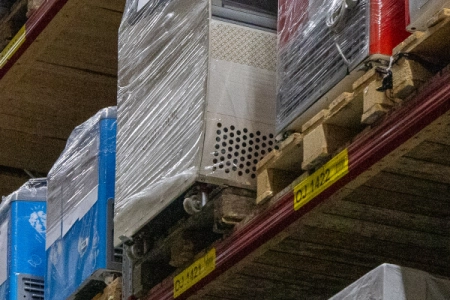
After receiving the goods, they are assigned a designated location in the warehouse. An organised storage system ensures that products can be found quickly whenever they are needed. Up-to-date inventory visibility also prevents you from holding unnecessarily high, or insufficient, stock levels. The information from inventory management can also be used for procurement and planning, ensuring that available stock is better aligned with demand.
If you work with hazardous substances, additional requirements apply to storage conditions and the separation of these goods from other products. Fragile, valuable or seasonal products may also require a specific storage method. By properly coordinating storage and inventory management, stock levels remain reliable and available warehouse space can be used efficiently.
Stage 3: Receiving an order
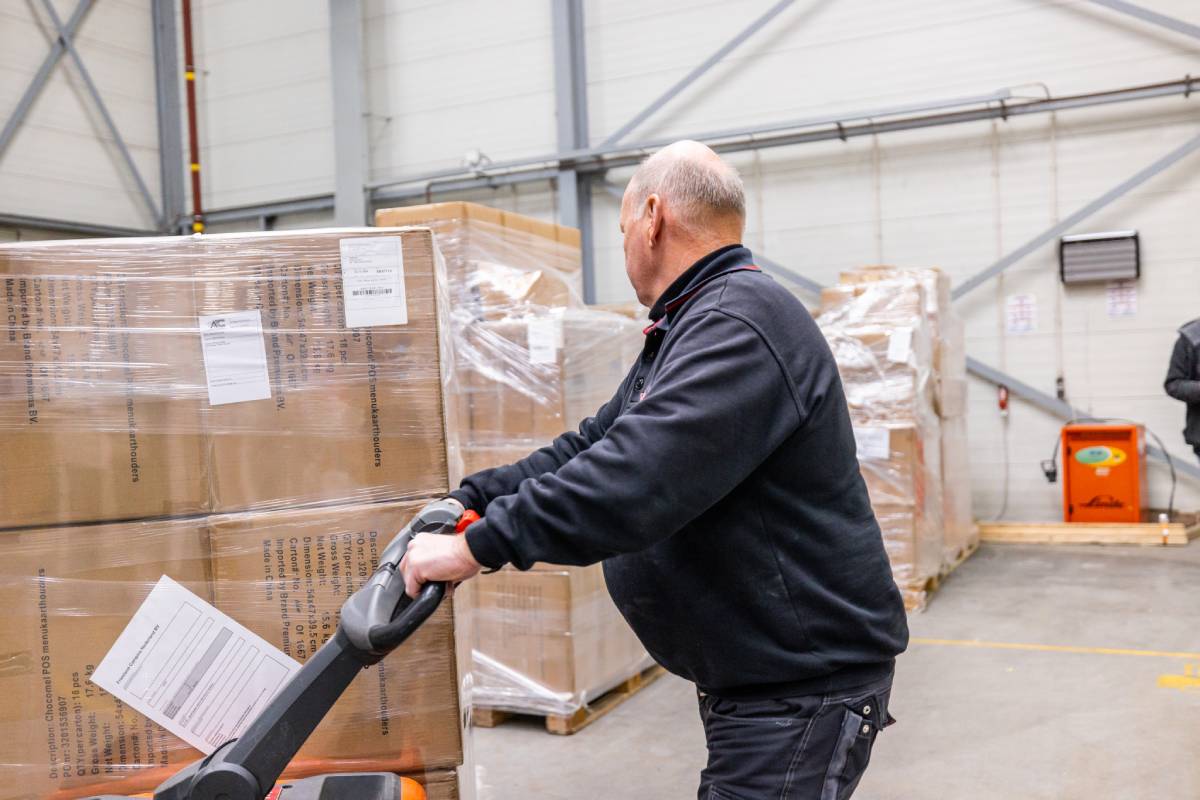
Once an order comes in, the required products are picked from inventory and checked. This phase is directly connected to fulfilment, covering everything from order processing to preparing the goods for shipment. Good coordination with inventory management is important here. Sufficient stock must be available to process orders completely and on time.
For many businesses, speed is important, but accuracy also plays a major role. The right products must be picked in the correct quantities and assigned to the right order. By properly coordinating order processing and fulfilment, the flow of goods remains manageable, even as order volumes increase.
Stage 4: Shipping the product
Once orders have been picked, they are packed and prepared for shipment. Do you ship directly to consumers, or are your goods delivered to stores, business locations or other distribution points? This can make a significant difference. If you operate in retail, you typically deal with smaller, more frequent deliveries to multiple store locations, often within strict delivery windows. For B2B deliveries, the focus is more on larger order volumes, less frequent deliveries and longer-term agreements with regular customers.
Which situation applies to your business largely determines how your carrier and shipping method should best be organised. By properly coordinating order processing, packaging and distribution, you can create a reliable flow of goods to the customer or the next link in the supply chain.
Stage 5: Arrival at the customer
The final step in the outbound journey is delivering the goods to your customer. When a shipment arrives on time and in good condition, it helps build trust in your brand. For time-sensitive products, delays at this stage can directly result in lost value, for example through a missed sales opportunity or a dissatisfied customer. With real-time track & trace, both you and your customer can keep a close eye on the location of a shipment.
Delivery requirements also vary from one business to another. A B2B shipment to a distribution centre, for example, requires a different approach than a delivery to a consumer or multiple retail locations. A logistics process should therefore be tailored to the way your customers and business partners are actually supplied.
Stage 6: Aftercare following product delivery
Your process does not stop once a shipment has been delivered. Returns and customer enquiries are also part of the process. When a product is returned, it needs to be received, inspected and registered, and a decision must be made on whether it can be resold. The associated administrative processing is also part of this phase. A well-organised process ensures that inventory records remain up to date and that returned products do not remain outside available stock for longer than necessary.
For customer enquiries and other forms of after-sales support, it is important that information from the logistics operation is readily available. Account management can play a connecting role between the customer and the different processes. This ensures that visibility of the flow of goods and the level of service is maintained even after delivery.
A logistics process that grows with your business
Your logistics needs change as your business grows. Order volumes increase, your product range expands, or you may have to deal with temporary peaks in demand. Your logistics process should therefore not only be efficient at your current volume, but also be able to adapt as your business continues to grow. Sourcing and procurement must also be able to respond to these changes, ensuring that the flow of goods throughout the supply chain remains aligned with the organisation's needs.
Fulfilment is about more than logistics alone. Depending on the collaboration, Hageman can manage various parts of the supply chain. In addition to physical logistics, this can include sourcing, procurement, financial administration and account management. This allows different links in the supply chain to be organised through a single logistics partner. With more than 70 years of experience in logistics and fulfilment, Hageman understands what is needed to ensure that these different links work together effectively. Discover Hageman's logistics services. This allows businesses to outsource logistics activities without the chosen solution becoming a barrier to further growth.
Looking for a logistics partner for your organization?